RAPIVEXA BY ALPHARAPID / SOFTWARE FOR CLINIC TEAMS
Clinic software. Connected teams. A clearer day.
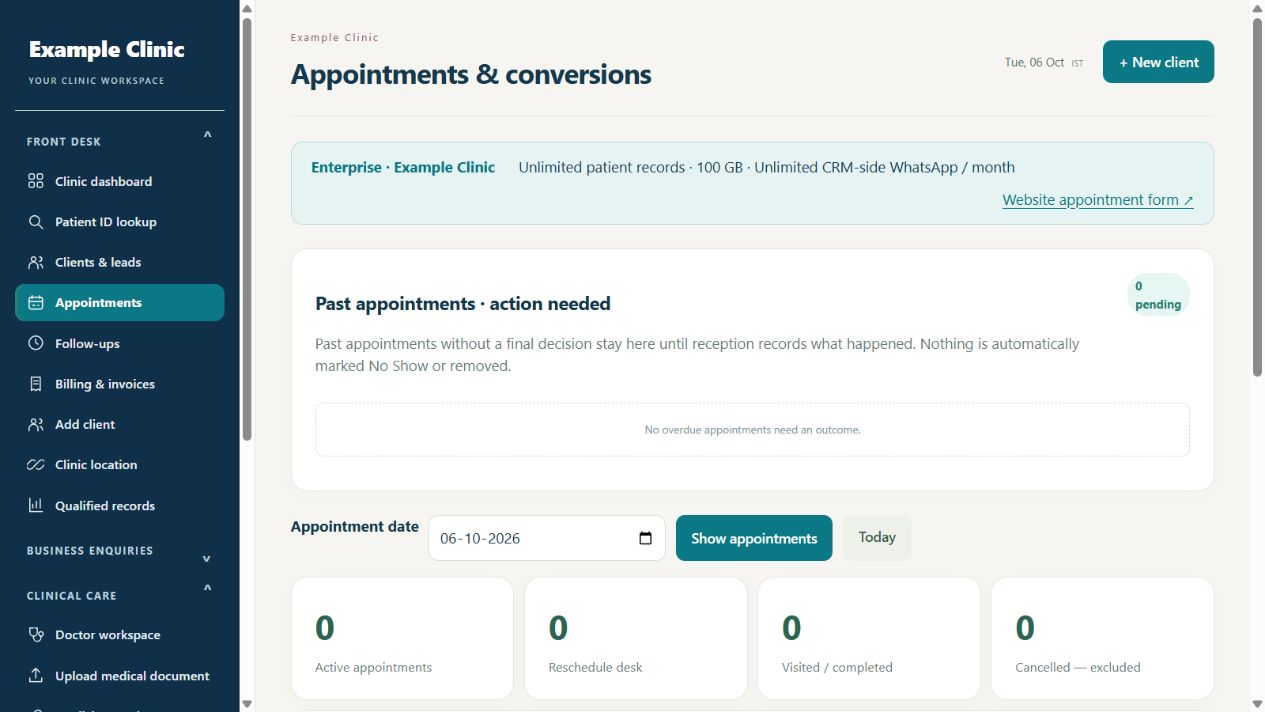
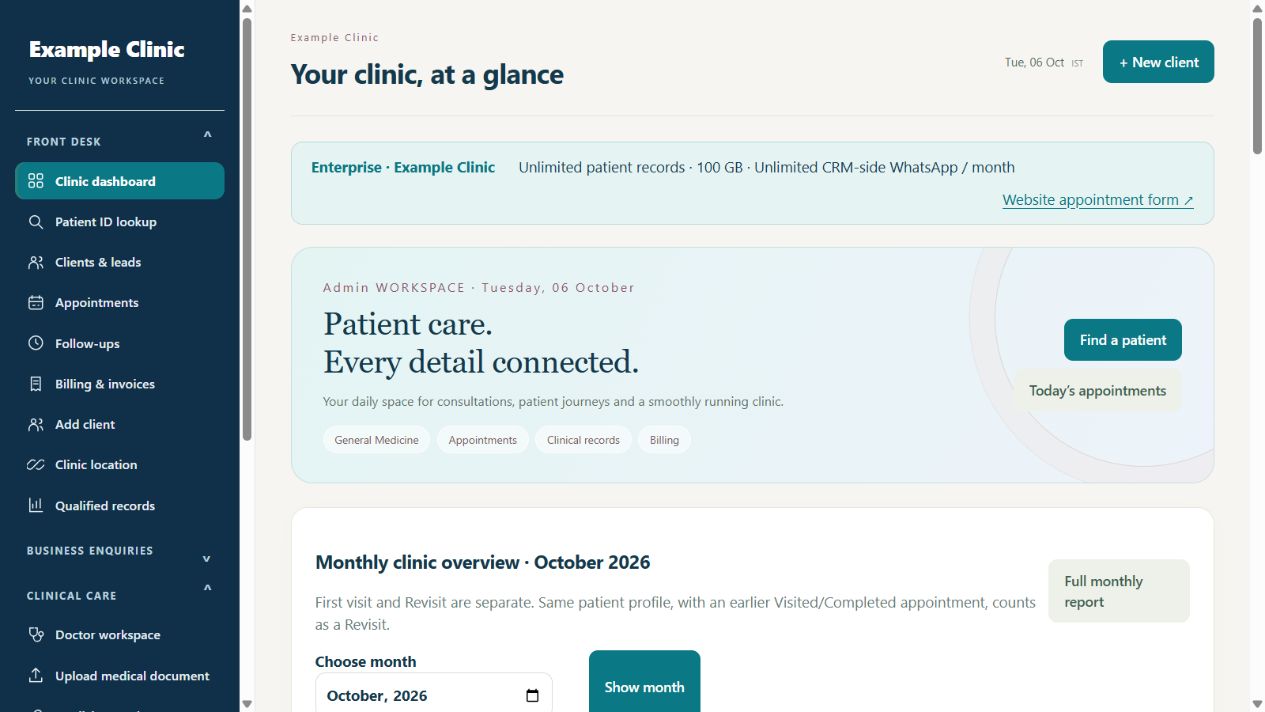
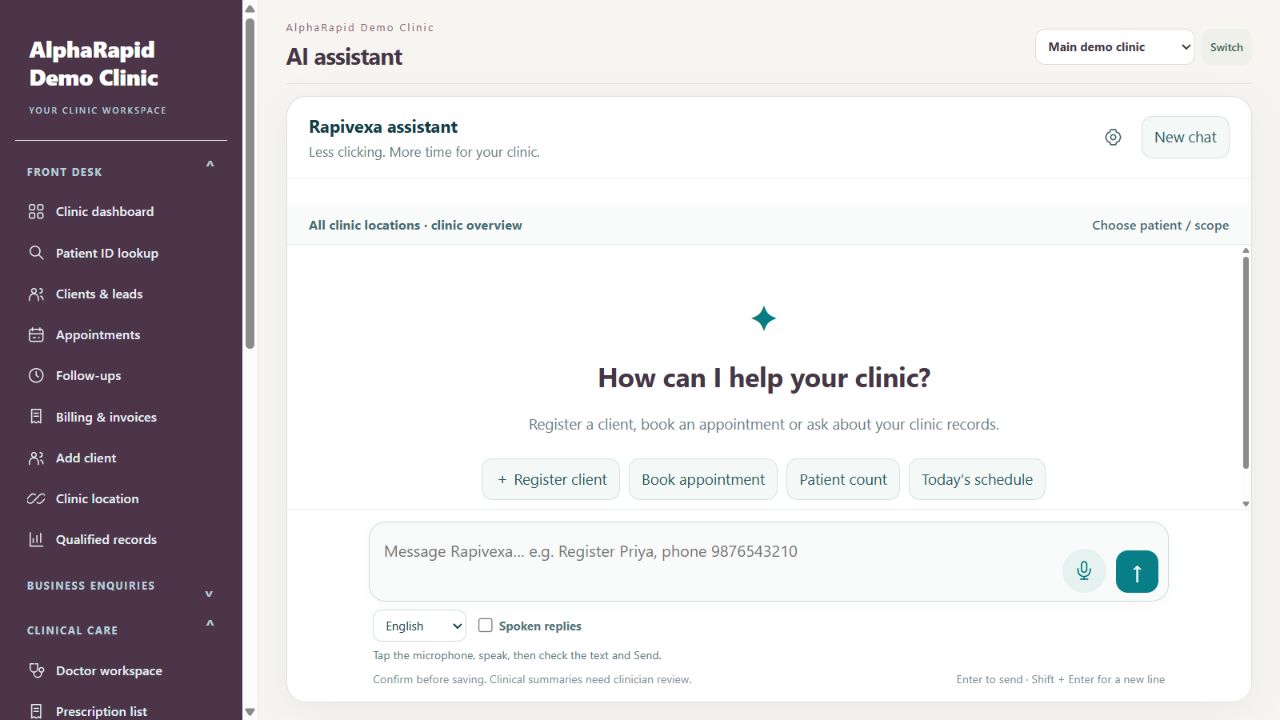
Clinic management software for owners, doctors and reception teams. Organise appointments, clinician-authored records, billing and patient follow-ups in one workspace.
From the first appointment to the next follow-up, see what a connected clinic day can feel like. SCROLL TO FOLLOW THE STORY
Aarya’s clinic journey
YOUR CLINIC / APPOINTMENTSA visit that fits her day.
Doctor selected
Preferred time · 10:30 am
Request sent to reception
RECEPTION / PATIENT RECORDWelcome back, Aarya.
Patient record found
Visit confirmed · Vitals recorded
Ready for the consulting room
DOCTOR / TODAY’S VISITThe person. The full picture.
History & earlier prescriptions
Vitals · Findings · Investigations
One connected consultation
PRESCRIPTION / REVIEWED BY DOCTORA clear plan to take home.
Reviewed medicines & instructions
Visit notes · Next steps
Shared in her patient portal
PATIENT PORTAL / SHARED RECORDSHer care, close at hand.
Prescription & medicines
Upcoming visits
A way back to her clinic
WHATSAPP / YOUR CLINICHello Aarya, a little reminder.
Your follow-up is due.
Contact the clinic to arrange a visit.
Illustrative message · Sent with consent
01 / 06
At home, Aarya requests a visit with the right doctor.
Illustrative story · Fictional patient & sample messages
YOUR CLINIC / APPOINTMENTSA visit that fits her day.
Doctor selected
Preferred time · 10:30 am
Request sent to reception
01BEFORE THE VISIT
A first appointment. A clear next step.
Meet Aarya. She finds the clinic’s booking page, chooses a doctor and requests a suitable visit. Reception reviews the request and confirms the appointment.
Aarya arrives. Reception finds her clinic patient ID, checks the appointment and records her vitals. The details are ready for the doctor in the same workspace.
PATIENT PORTAL / SHARED RECORDSHer care, close at hand.
Prescription & medicines
Upcoming visits
A way back to her clinic
05BACK HOME
Out of the clinic. Still connected to care.
Back home, Aarya has a place to check her shared prescription, prescribed medicines and upcoming appointments. She knows how to contact the clinic for the next step.
WHATSAPP / YOUR CLINICHello Aarya, a little reminder.
Your follow-up is due.
Contact the clinic to arrange a visit.
Illustrative message · Sent with consent
06WHEN THE NEXT VISIT IS DUE
A thoughtful follow-up, on WhatsApp.
With consent and the clinic’s configured reminders, a due follow-up can prompt an approved WhatsApp message. Reception helps Aarya arrange the next visit—and the story continues.
An approved WhatsApp message requires consent, approved templates and enabled provider setup. Features vary by plan; patient access and online care start with Clinic.
Illustrative story · Fictional patient & sample messages
THE WHOLE CLINIC, IN THE LOOP
Different roles. One connected day.
Doctors with context
Reception with clarity
Patients with access
BUILT AROUND THE PEOPLE WHO USE IT
Find your place in a calmer clinic.
From the consulting room to the front desk, each person can focus on the work they are here to do.
For doctors
Walk into the visit with the full picture.
Find earlier prescriptions, review reception-entered vitals and change the medicines that need changing. Keep the detail without starting over.
Features vary by plan. Live calling, payment collection and messaging require the clinic’s enabled provider configuration; provider usage may be charged separately.
Choose your plan, add clinic details and complete verified payment. Set up your team and workflow with free setup help. Custom CRM starts with a separate consultation.
Pay monthly or choose 1, 2, 3 or 5 years upfront. Starter, Clinic and Enterprise create your clinic after verified payment. Custom starts with a consultation. Taxes and provider usage charges are separate. Term savings are included in the displayed price; no coupon is needed.
¹ CRM-side WhatsApp allowance requires your configured provider and approved templates. Provider credits are not included. AI and Smart Scan require enabled configuration and appropriate staff review.
Can’t find what you’re looking for? Our team is a conversation away.
What is Rapivexa?+
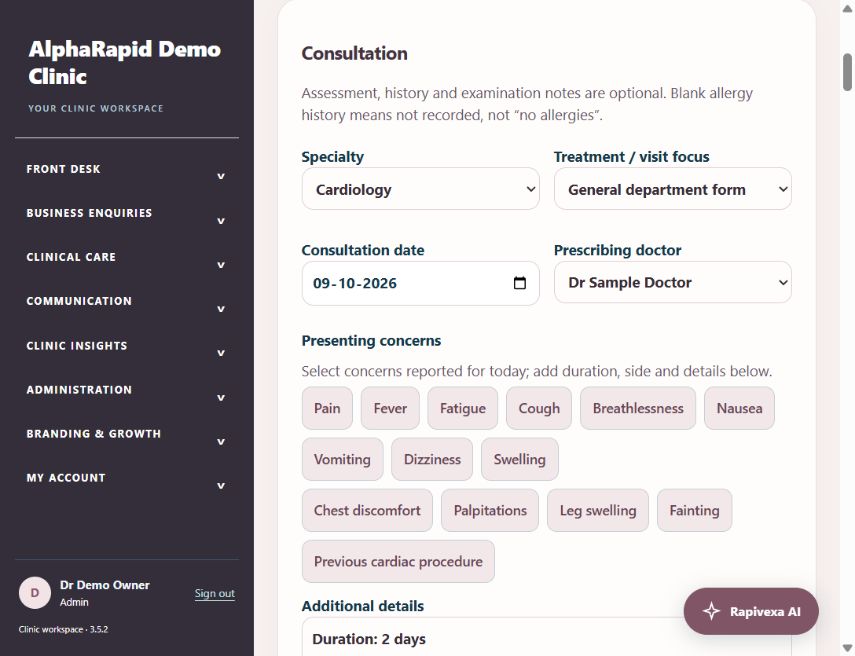
Rapivexa is specialty-specific clinic software configured for your practice by the AlphaRapid team. This website helps you explore specialties, purchase a plan and manage billing and onboarding.
What happens after I purchase a plan?+
Verified payment creates an independent Rapivexa clinic and admin login for Starter, Clinic or Enterprise. Your client area shows the CRM link, username and password. Custom starts with a requirements form and a personal consultation.
Is there a plan for my specialty?+
Explore our specialty pages for aesthetics, ophthalmology, general medicine, surgery and more. If your field is not listed, talk to our team so we can review the fit before you purchase.
Can I choose a longer subscription?+
Yes. Choose monthly or 1, 2, 3 or 5 years on eligible packages. Longer plans are paid upfront; their total and monthly equivalent are shown before checkout. Your account shows the renewal date, and you can create a renewal order from billing. Automatic recurring charges are not enabled.
BETTER SYSTEMS. MORE ROOM FOR CARE.
Picture your next clinic day. A little more connected.
Bring your real workflow to a demo. See the patient journey, ask your questions and choose what fits.